Art of Fighting
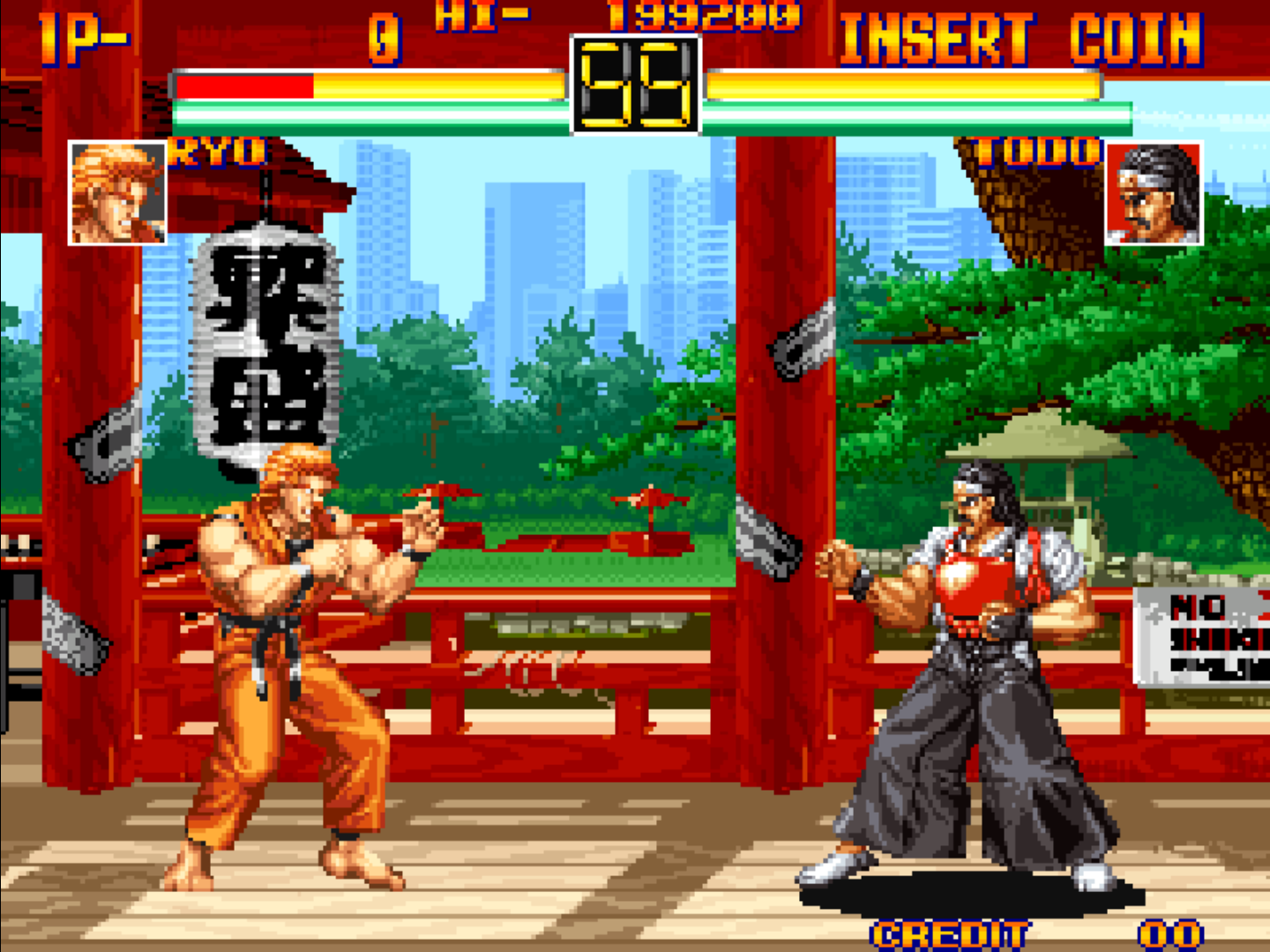
Ryo Sakazaki and Robert Garcia set out to find Ryo’s sister, Yuri, who has been kidnapped by Mr. Big. Mr. Big has taken the girl to entice Takuma Sakazaki, Ryo’s father and originator of the fictional form of karate known as Kyokugen Karate (“Extreme style”), and because Ryo refused to work for Big. After they defeat Mr. Big, Ryo and Robert face the enigmatic Mr. Karate.
Ryo and Robert are the only playable characters in the single player story mode, although eight of the game’s ten characters are playable by default in the two player versus mode.
System: NeoGeo Developer: SNK Released: 1992
You can find special moves/combo list here.
Instructions:
Click on the “Start Game” button above (you many need to wait and close the advertising first) to start the game. Once loaded you can customize your controls (either keyboard or gamepad/joystick), screen settings, etc. Settings can be saved. You can also save (and load) your progress in the game. If you have any problems, check out the Help! section for solutions.
Introduction
In the annals of arcade gaming history, the early 1990s were defined by a seismic shift in the landscape. One genre, in particular, stood tall amid this revolution – one-on-one fighting games. Street Fighter II had just exploded onto the scene, and the gaming world was captivated by the adrenaline-fueled, one-on-one brawls. Seizing this moment, SNK, a formidable player in the arcade gaming arena, unleashed a groundbreaking title that would shape the future of fighting games: “Art of Fighting.” Released in 1992, “Art of Fighting” was more than just another fighting game; it was a pioneering force that introduced innovative gameplay, iconic characters, and breathtaking visuals. In this 1000-word description, we’ll journey back to the dawn of the fighting game era and explore what made “Art of Fighting” an unforgettable classic.
The Birth of “Art of Fighting”
“Art of Fighting” emerged from the creative minds at SNK, a company already known for its contributions to the arcade gaming world. However, it was with this game that SNK truly asserted its dominance in the fighting game genre. In 1992, when one-on-one fighting games were gaining unprecedented popularity, SNK recognized the potential of the genre and set out to create a game that would not only compete with established giants but also introduce its own unique flavor to the mix.
Visual Excellence
The first thing that struck players upon approaching an “Art of Fighting” arcade cabinet was its jaw-dropping visuals. Powered by SNK’s proprietary Neo Geo hardware, the game pushed the graphical boundaries of the time. Character sprites were meticulously detailed, and backgrounds were vibrant and immersive. The character designs were nothing short of iconic, with each fighter boasting a unique personality and appearance. What set “Art of Fighting” apart was the level of detail in character animations – every punch, kick, and special move was executed with a lifelike fluidity, immersing players in the action.
The game captured the essence of manga and anime through pixel artistry, and the result was visually stunning. “Art of Fighting” was more than a game; it was a visual spectacle that demonstrated the potential of pixel art in conveying emotion and intensity.
Innovative Gameplay Mechanics
While “Art of Fighting” adhered to the fundamental one-on-one combat premise, it introduced groundbreaking gameplay mechanics that would leave a lasting impact on the genre. The most revolutionary of these was the “Spirit Gauge,” a limited-use super meter positioned beneath the player’s life bar. This gauge, representing the character’s stamina, powered the devastating special moves known as “Super Attacks.” However, it had a catch – as the character’s health dwindled, so did the spirit available for these potent moves. This introduced a strategic layer to the gameplay, forcing players to make calculated decisions about when to unleash their most powerful attacks.
Another game-changer was the dynamic “zoom-in” effect. When a character landed a powerful blow, the screen would dramatically zoom in on the impact, heightening the sense of intensity and immersion. This cinematic touch made every punch and kick feel visceral and impactful, setting “Art of Fighting” apart as a visual and visceral marvel.
Storytelling Through Battles
“Art of Fighting” was more than just a series of brawls; it was a narrative-driven experience, a relatively rare concept in fighting games at the time. The game followed the journey of Ryo Sakazaki and his friend Robert Garcia, as they embarked on a mission to rescue Ryo’s sister, Yuri, abducted by the malevolent crime lord, Mr. Big. Each battle in the game was a piece of the overarching narrative puzzle. Players learned about the characters, their motivations, and the unfolding plot as they progressed, creating a deep investment in the story’s outcome.
Character interactions and dialogues between battles further enriched the storytelling. These interactions provided valuable context, revealing the characters’ personalities and forging emotional connections between players and the virtual fighters. “Art of Fighting” was a game that made players care about its characters, and this investment in the story enhanced the overall gaming experience.
Memorable Characters
One of the standout aspects of “Art of Fighting” was its roster of memorable characters. From the determined and stoic Ryo Sakazaki to the acrobatic and flamboyant King, each fighter was meticulously crafted. Character designs were inspired by various martial arts disciplines, creating a diverse cast ranging from karate and boxing to muay thai and taekwondo. This diversity of fighting styles added depth to the gameplay, allowing players to experiment and find their preferred combat style.
One character deserving special mention is Takuma Sakazaki, Ryo and Yuri’s father, who initially concealed his identity as the enigmatic Mr. Karate. His enigmatic appearance and fighting style added an element of mystery to the game, keeping players intrigued.
The antagonist, Mr. Big, exuded a menacing presence throughout the game, and his confrontations with the protagonists were tense and unforgettable. The character design, voice acting, and animations collectively made Mr. Big a memorable and formidable adversary.
Legacy and Influence
“Art of Fighting” carved a permanent niche for itself in the fighting game genre and the gaming industry as a whole. It was the inception of a successful franchise that spawned sequels and spin-offs, delving deeper into the stories of its characters and expanding its gameplay mechanics. The triumph of “Art of Fighting” solidified SNK’s position as a formidable player in the arcade gaming arena, paving the way for future classics like “The King of Fighters” series.
The game’s influence extended far beyond its immediate impact, contributing to the evolution of the fighting game genre. The concept of the “Spirit Gauge” introduced in “Art of Fighting” would go on to inspire similar mechanics in other fighting games, such as “Street Fighter Alpha” and “Tekken.” The dynamic zoom-in effect used to emphasize impactful strikes became a staple in many fighting games, enhancing the genre’s visual spectacle.
Conclusion
In the realm of arcade fighting games, “Art of Fighting” occupies an esteemed place. Its breathtaking visuals, innovative gameplay mechanics, immersive storytelling, and memorable characters made it an enduring classic. Released in 1992, it remains an essential milestone in the history of video games, showcasing the potential of storytelling within the fighting game genre and pushing the boundaries of graphical and animation excellence. “Art of Fighting” not only held its ground against its contemporaries but also etched its own legacy, influencing subsequent titles and cementing itself as a beloved and iconic classic in the annals of arcade gaming history.